
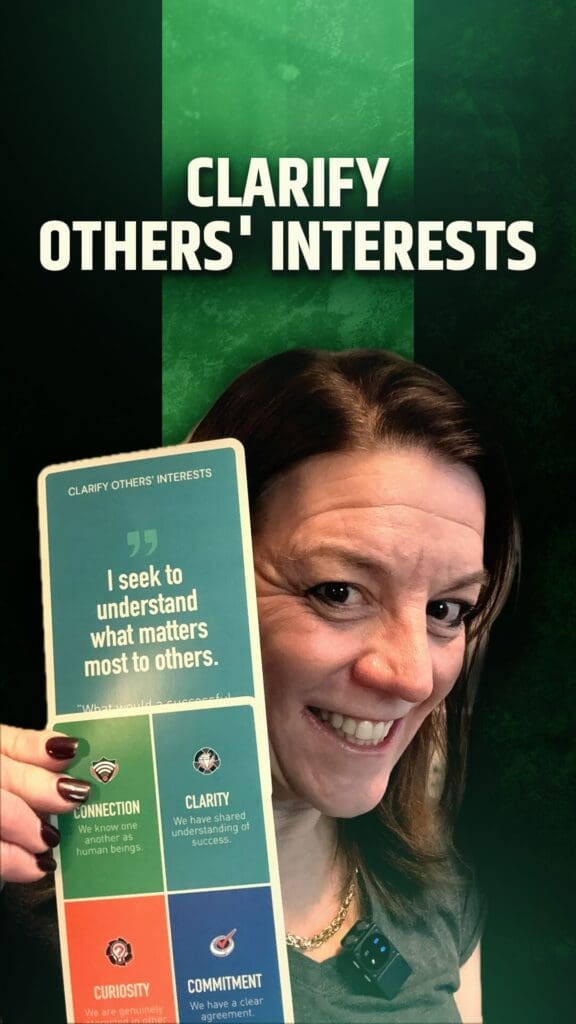
Click on the video to learn more
Want better outcomes at work? Start with this simple question
Most people tell you what they want. It’s often harder for them to articulate why they want it. Here’s how to uncover what truly matters—clarify interests and build smarter outcomes in every conversation.
When someone makes a request, takes a stance, or digs in on an issue, it’s tempting to respond to what they say.
But behind every “I need this feature,” every “I can’t miss this deadline,” and every “This has to happen,” there’s something else: a pressure, a concern, a hope, a need.
Something they haven’t said—yet.
That’s where real clarity lives. And that’s the power of practicing the Clarify Others’ Interests habit.
If you respond only to what’s said out loud, people might walk away feeling unheard. But when you uncover what’s driving what they said? That’s when progress happens.
What It Means to Clarify Others’ Interests
This isn’t just about asking follow-up questions. It’s about shifting your mindset from reacting to requests to understanding the underlying reasons.
When you Clarify Others’ Interests, you:
-
Stay curious longer
-
Pause before solving
-
Ask what’s underneath the urgency
-
Look past positions to see needs
-
Surface the why, not just the what
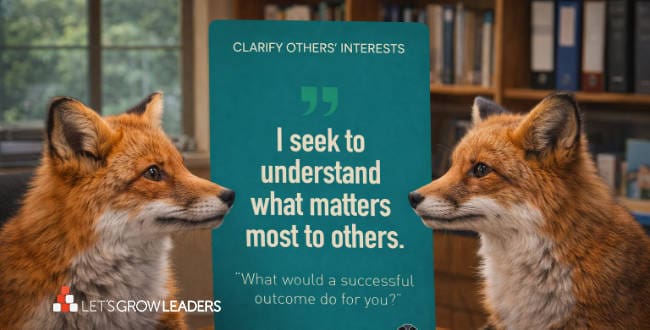
A simple question like “What would a successful outcome do for you?” can turn a tense conversation into a shared problem-solving session.
Why This Habit Leads to Better Decisions and Less Conflict
When you understand what someone really values, you can:
-
Solve the actual problem—not just the visible one
-
De-escalate tension before it turns into resistance
-
Design solutions people feel great about
-
Strengthen collaboration across competing agendas
-
Make decisions that stick—because they reflect what people care about
People aren’t as attached to what they’re asking for as they are to why they’re asking. When you get to the heart of it, they’re often more flexible than you think.
How to Build the Habit in Conversations
- Use Your Go-To Phrase
Try: “What would a successful outcome do for you?”
This shifts the conversation from demands to shared understanding. - Listen for Values, Not Just Words
When someone says “I need this by Friday,” ask yourself:
Is this about control? Visibility? Risk? Anxiety? - Reflect What You Hear
Try: “It sounds like what matters most is not being caught off guard—did I get that right?” - Resist the Rush to Solve
People become more flexible when they feel heard. Don’t skip the listening. - Use Soft Openers to Explore Motivation
Try: “Why this?” or “Why now?” These open the door without creating defensiveness.
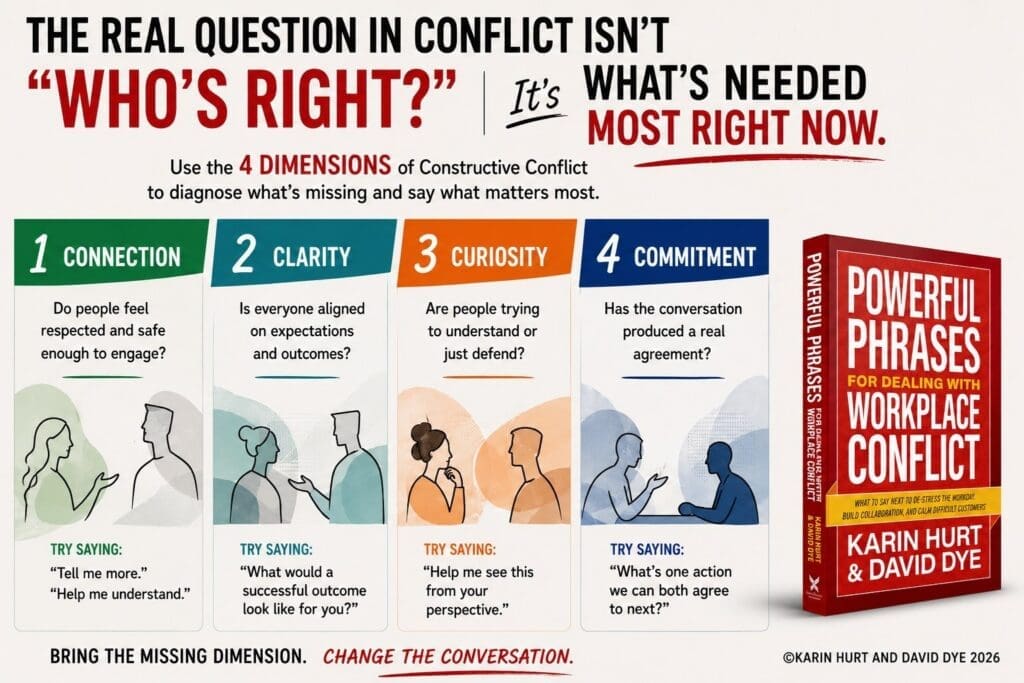
Powerful Phrases to Show Up More Curious
Here are a few more Powerful Phrases to help you clarify interests:
-
“What’s most important to you about this?”
-
“Help me understand what’s underneath the urgency.”
-
“If we couldn’t do exactly that—what would still make this feel like a win?”
-
“What’s at stake for you in how this turns out?”
-
“Is there a specific outcome you’re hoping to avoid?”
Three Mini-Experiments to Build the Habit
Mini-experiments are a great way to reinforce this habit and make it stick.
- Use the Phrase Daily
For 10 days, ask “What would a successful outcome do for you?” in one conversation each day.
Track what insights you uncover. - Try the Second Layer Test
When someone makes a request, don’t respond right away. Ask one clarifying question first.
Notice how often the direction shifts. - Map Interests in Your Next Meeting
Don’t just write down what people say—note what might be driving it, and check for understanding.
When you clarify others’ interests, you stop reacting to the noise and start responding to what actually matters. That’s where trust grows. That’s where collaboration gets real. And that’s where better solutions begin.
Are you looking to build stronger collaboration on your team? Consider a SynergySprint Team Retreat. Click on the image to the right to learn more.



0 Comments