

The Leadership Skill Too Many Executives Skip (And Why It Spreads)
You’ve got a strong senior team… so why are the hard conversations so hard?
Smart, experienced leaders… who hesitate to hold their teams—and one another—accountable.
Issues linger longer than they should. Conversations get softened—or skipped altogether. And issues that could be addressed early… aren’t.
Why the feedback gap is so tempting
If you’re experiencing the feedback gap in your senior team, it’s likely for one of these reasons.
1. Executives were never been taught how to do this well
Giving feedback to a peer—or a high-performing senior leader—is very different than coaching an individual contributor. The stakes feel higher. The margin for error feels smaller. And in many cases, they got promoted for other reasons– and never learned the essential management skill of having difficult accountability conversations.
2. Tricky organizational dynamics and awkward reporting relationships and structures
There are relationships, history, competing priorities, and sometimes unspoken power dynamics. That complexity changes how (and whether) feedback gets delivered.
3. They’re human
They want to be liked. They want to maintain trust. And they don’t want to damage a relationship that’s critical to getting work done.
That combination?
It turns feedback into a conversations they would rather avoid… and often do.
The quiet assumptions that make it worse
By the time someone reaches your senior team, a few subtle beliefs tend to creep in:
“They should already know this.” (A bit of magical thinking.)
“They don’t need much guidance from me.”
“I’ve got bigger, more strategic priorities.”
So feedback becomes:
Less frequent. Less specific. Or saved for when something goes really wonky.
And when leaders do step in—without shared language or practice—it can land too blunt, too indirect, or too late.
Which makes them even more cautious the next time.
How the gap spreads
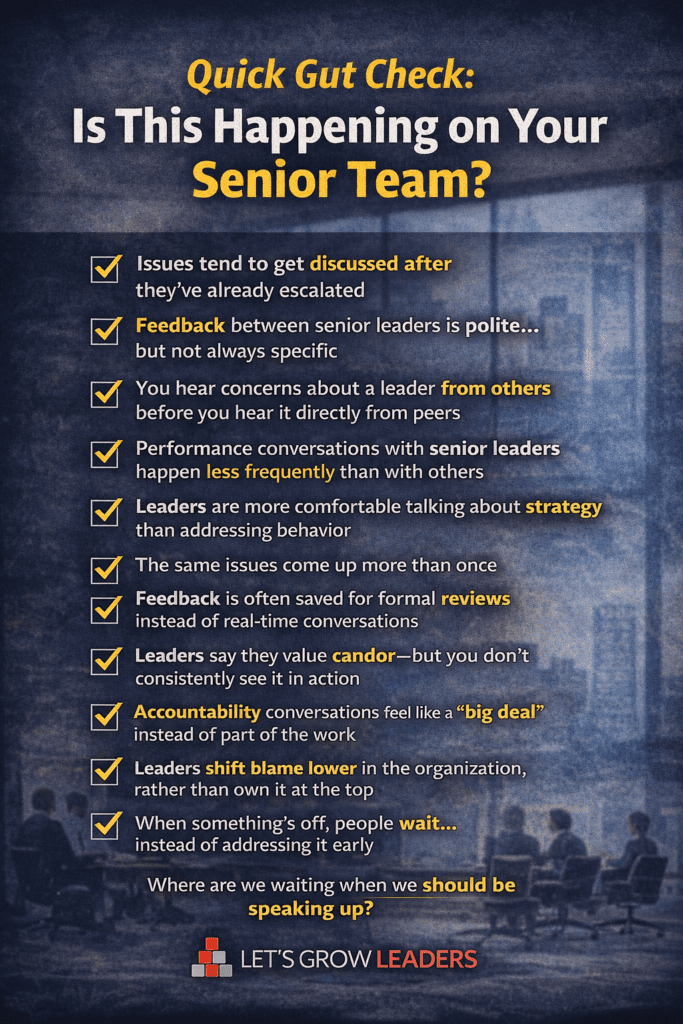
Here’s where this becomes a culture issue—not just a leadership habit.
What your senior leaders experience… they replicate.
If they’re not receiving clear, useful feedback from their boss or their peers, they don’t build the muscle themselves.
So when it’s time to lead their teams, you see the same patterns:
- Hesitation to address issues early
- Overly soft or vague feedback
- Avoidance of tough but necessary conversations
Not because they don’t want to lead well.
Because they’re following the example they’re experiencing.
This is how a feedback gap at the top becomes a feedback gap everywhere.
As we often say, people don’t follow your intention—they follow your example.
The cost to your culture
You can’t build a high-performing, human-centered culture without consistent, meaningful feedback.
At every level, people want to know:
- What’s working
- What’s not
- How to improve
When that’s missing, you don’t get alignment or growth.
You get:
Guessing.
Hesitation.
Workarounds.
And sometimes, avoidable turnover.
When senior leaders aren’t holding one another accountable, the entire organization feels it.
What we’ve seen work (and stick)
The shift doesn’t happen through a memo or a tool.
It happens when senior leaders build the skill—and the habit—together.
They don’t just endorse your performance management training. They model it.
And when your senior teams show up as performance management role models, three things change quickly:
Confidence – leaders stop overthinking and start addressing issues earlier
Competence – feedback becomes clearer, more specific, and more useful
Courage – leaders are more willing to say what needs to be said
Most importantly, It becomes consistent.
If you want to eliminate the feedback gap, start here
Start with your senior team.
Give them a shared language and practical tools they can use right away.
And create the space to practice—so feedback becomes part of how they lead, not something they avoid.
If your senior team is struggling with feedback, the fastest way forward is to build the skill together.
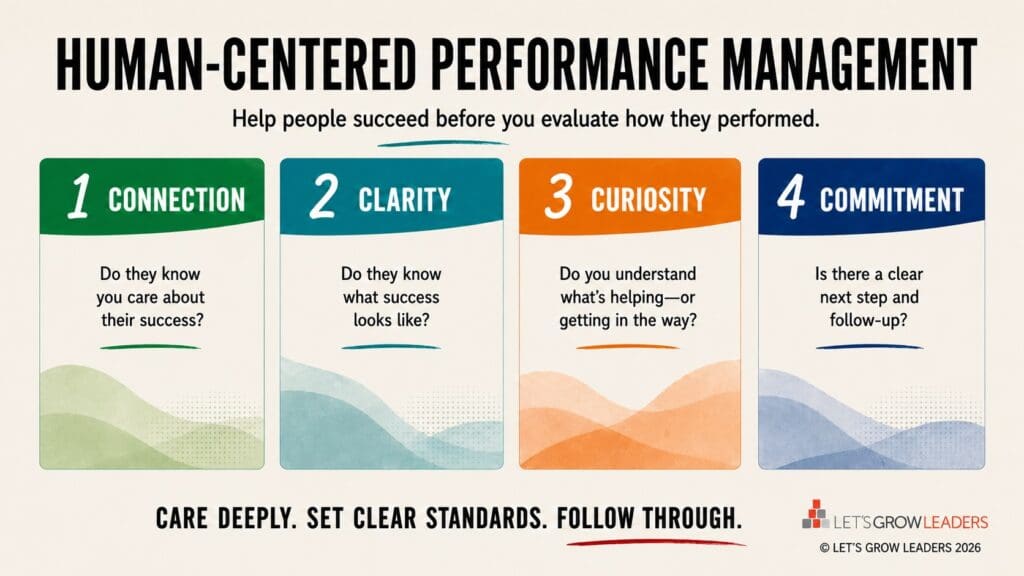
That’s exactly what we focus on in our Practical Performance Management for Human-Centered Leaders program.
Because when your senior leaders get this right, it sticks.
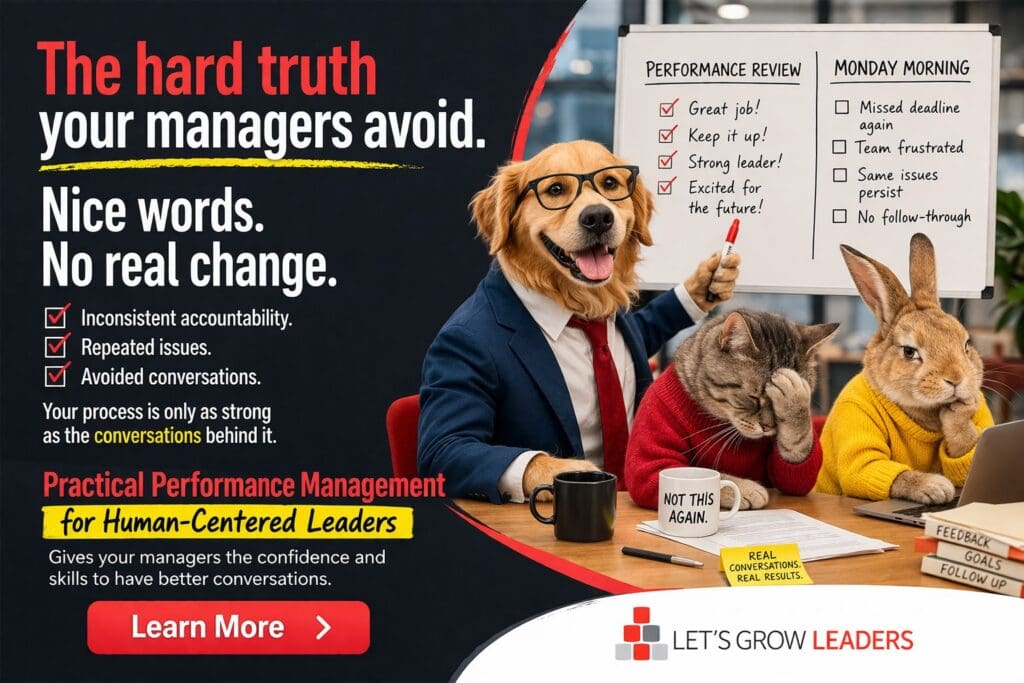
Click here to learn more about our new practical performance management for human-centered leaders program

0 Comments