
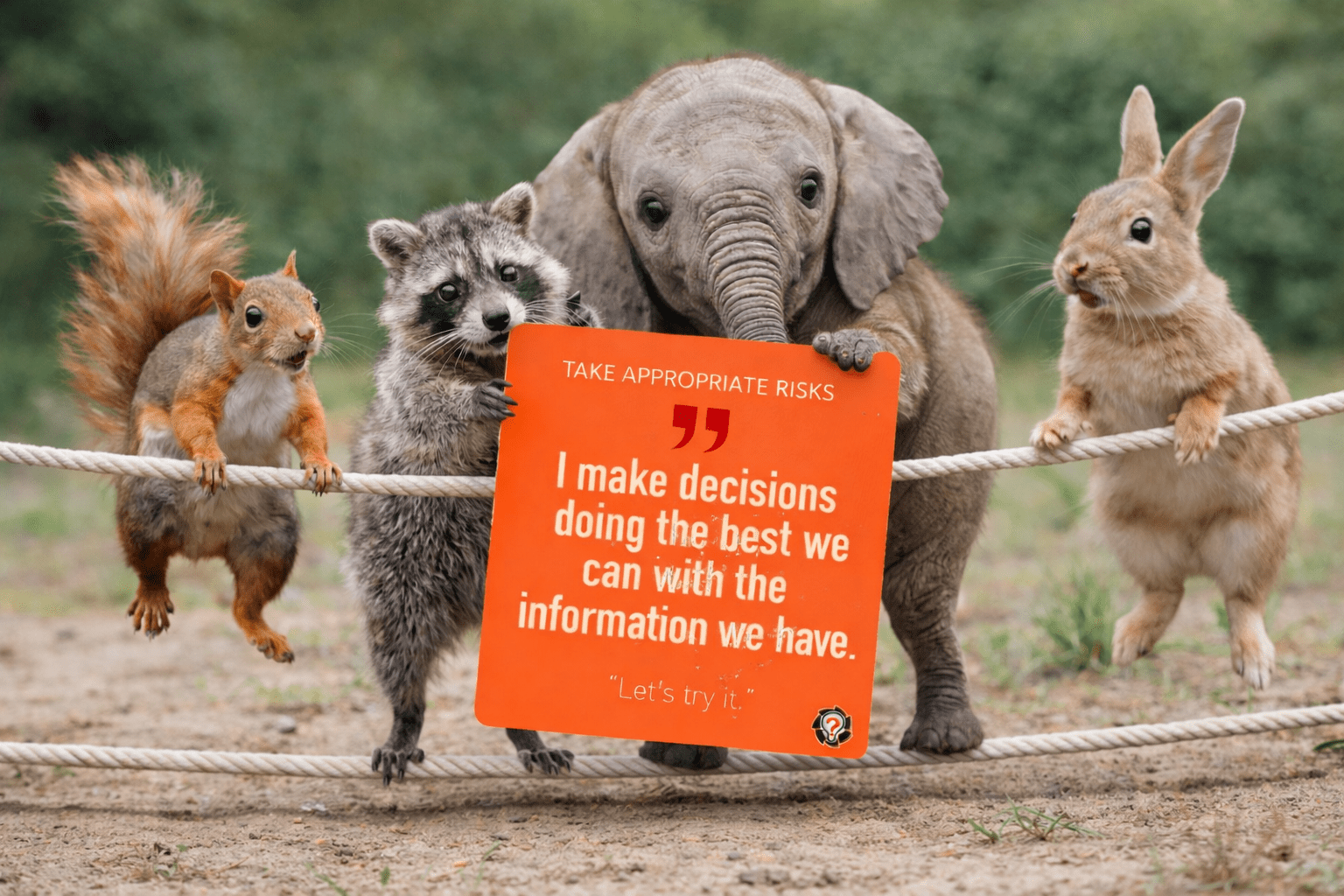
Make better decisions with incomplete information
You already know this, even if you wish it were otherwise: you will never have all the information you need to make the perfect decision. If certainty were required, half your calendar would be labeled “Wait for More Data.”
And yet, here you are—mid-project, stalled by one fuzzy decision. Not because it’s dangerous. Because it’s uncomfortable. When you take appropriate risks, you stop waiting for certainty and start using judgment. You move work forward with the information you have—not the information you’re hoping will show up five minutes after the deadline.
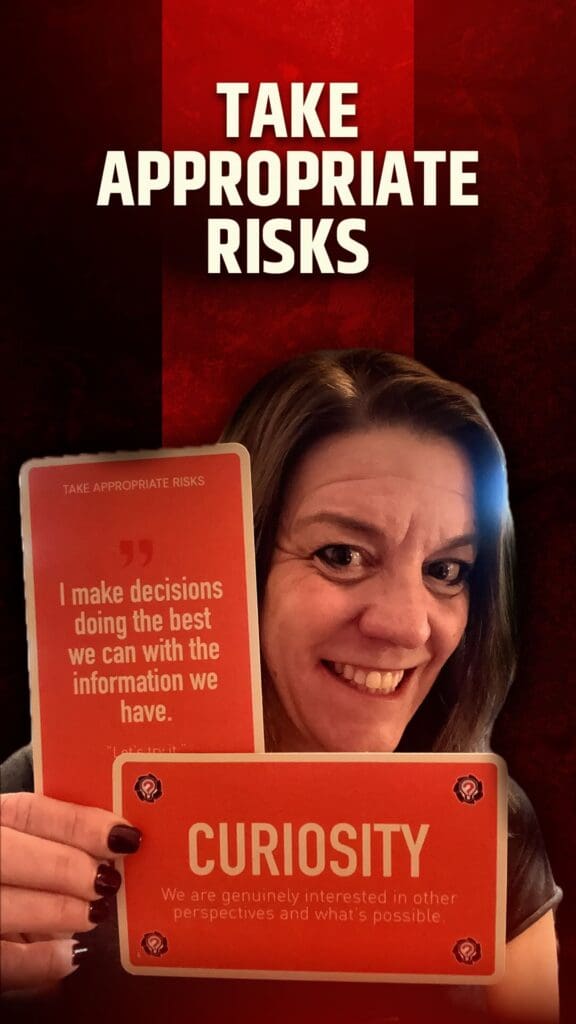
Click on image above to learn more from Karin Hurt about taking appropriate risks
This means…
Making a call before the momentum dies.
It looks like saying out loud, “Here’s what we know. Here’s what we don’t. And here’s why I think we should move anyway.”
And choosing progress over perfect agreement—and then sticking around to own what happens next.
This is where people get tripped up. They think taking risks means acting fast or acting bold. It doesn’t. It means acting responsibly without hiding behind more data.
How to Decide if a Risk is Appropriate
Here’s a simple gut check.
If this goes sideways, could you recover?
If it doesn’t work, is the damage contained—or would it create real harm?
And here’s the quiet question most people avoid:
Is waiting actually safer, or just more comfortable?
If the answers tell you the downside is manageable and the cost of delay is real, you’re probably not being risky—you’re being cautious.
Why This Habit Changes Everything
Most teams don’t slow down because they lack ideas. They slow down because no one wants to be the one who decides.
When you’re willing to take appropriate risks, you create momentum. Not by forcing action, but by giving people permission to move.
You model judgment instead of escalation. Ownership instead of hedging. Learning instead of waiting.
How to Practice This Without Overthinking It
Start with a phrase: “Let’s try it.”
That sentence does a lot of heavy lifting. It lowers the stakes. It reframes the decision as learning. It reminds everyone that moving forward doesn’t mean locking yourself in.
Make the decision. Pick a moment to revisit it. Then talk about what you learned.
That’s how judgment gets built—one decision at a time.
See Also: A Manager’s Guide to Better Decision Making
Three Mini-Experiments to Build the Habit
If you’ve been in one of our interactive keynotes or workshops, you know how mini-personal experiments are a great way to make habits stick.
1. The 80% Rule
For 30 days, decide when you have 80% of the information you want.
Ask: Will waiting add insight—or just delay action?
2. Decision Debrief
Log decisions made under uncertainty.
Review one week later:
-
Was the risk manageable?
-
What would you repeat or change?
3. The “Let’s Try It” Challenge
Once a day, use the phrase to move something forward that’s stalled.
Notice what changes when you stop waiting for certainty.
Taking Appropriate Risks isn’t about being bold.
It’s about being willing to decide.
You move, learn and adjust.


0 Comments