
Practical Leadership Development
for Human-Centered Leaders
We help human-centered leaders find clarity in uncertainty, drive innovation, and achieve breakthrough results.
You’ve brought in leadership development consultants before. Your managers learned some theory, but then everyone got sucked back into the whirlwind of day-to-day operations—and nothing changed. It was frustrating and damaging to morale. Let’s get it right this time.
No More “Check the Box” Leadership Development –
We Know How To Make It Stick
At Let’s Grow Leaders, our leadership development programs and proven, researched-based techniques create sustained transformation. We equip your leaders with practical tools to cultivate lasting habits and build strong, cohesive, courageous cultures.
Values-Based Culture Change for Sustained Performance in Uncertain Times
Executive & Leadership Development to Blend the Bottom Line with the Human Spirit
Highly Engaging Management Training with Practical Tools You Apply Right Away
Teambuilding to Accelerate Performance, Reduce Stress, and Foster Collaboration
Why It Works

Perfect For Your Team
We calibrate your program to emphasize fundamental leadership approaches, remote workforce solutions, or to develop your team of micro-innovators.
Sustainable
Action learning activities and the state of-the art Learning Labs keep your team engaged and ensure lasting behavior change.

Practical
Participants leave each session with simple tools and approaches to start applying and repeating for immediate results and internalization.
Very Sustainable!
Our “Leaders as Teachers” methodology empowers your managers to grow leaders themselves—boosting your company’s professional development prowess for years to come.
In more than a decade since founding Let’s Grow Leaders, we have grown tens of thousands of leaders on every continent (except Antarctica) working with fast-growing businesses and some of the largest global brands. We’ve been where you are, faced the challenges and the headaches, and know what it takes to achieve lasting results.
Contact us today for a free leadership development consultation.
Growing Leaders At These Organizations











Our Clients Say It Best
"Karin and David brought years of real-life professional experience in a well-designed training program. They were competent, empathetic, and focused on delivering immediate value to our team."
– Subhajit Bagchi, President, Tripwire

"Karin and David made an immediate impact on our culture. They are true strategic partners who’ve provided us the wisdom and tools needed to ensure high ROI, sustainability and application into our daily business processes."
– Andrew Thomas, Chief Marketing Officer, Kforce Inc.

"Perfect for our team and the issues that we face on a day-to-day basis."
-Sean Barrett, VP Product Management, Albertsons

"You will be amazed at the possibilities when your employees feel truly empowered to share their ideas and solve problems."
– Jeanne Martel, CEO and Co-Founder, Clinical Mind

Where in the World are
Karin & David?
Leadership Books
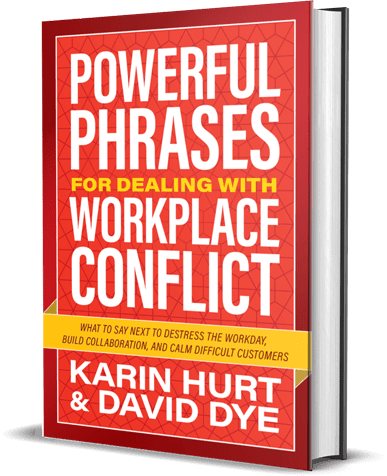
POWERFUL PHRASES
Master any workplace conflict with confidence and ease. Have less drama, better results, and thrive at work.
Powerful Phrases for Dealing with Workplace Conflict is an essential resource to help you destress your workday, foster collaboration, and calm difficult customers. Learn more.
Karin Hurt & David Dye
HarperCollins Leadership (May 2024)
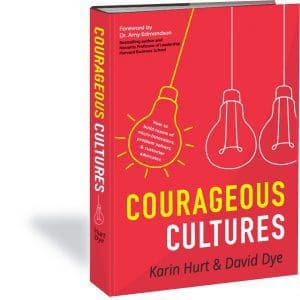
COURAGEOUS CULTURES
How to Build Teams of Micro-Innovators, Problem Solvers, and Customer Advocates
Too often, employees and leaders both feel that no one cares about making things better. Our research shows that’s not true. Courageous Cultures provides a road map to build a high-performance, high engagement culture around sharing ideas, solving problems, and rewarding contributions from all levels. Learn more.
Karin Hurt & David Dye
HarperCollins Leadership (July 2020)
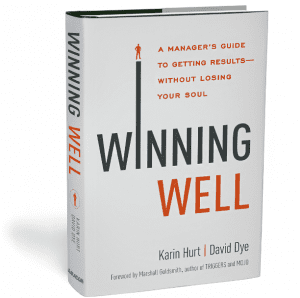
WINNING WELL
A Manager’s Guide to Getting Results Without Losing Your Soul
To succeed, managers cannot choose between results and relationships. They must get people to achieve while creating an environment that makes them truly want to. Winning Well gives leaders a quick, practical action plan―complete with examples, stories, online assessments, and more―for engaging teams and getting the results you need. Learn more.
Karin Hurt & David Dye
AMACOM (April 2016)



Leadership Blog
Karin and David are leadership teachers, international keynote speakers, and the authors of five books. For more details about their books, or to place a bulk order, visit our books page.

How to Lead with Their Best Interest at Heart (Even When It’s Hard)
How Do You Show Someone You Have Their Best Interest at Heart? It’s one of the most reassuring phrases you can say to someone—especially at work, "I’ve got your best interest at heart.” Said sincerely, it can be comforting, encouraging, even inspiring. Said poorly, it...

Quick Decisions: How to Collaborate When You Have to Decide Fast
When urgency strikes, and you need quick decisions. Skip the swirl—not the people. You’ve got 20 minutes and you need to make a few quick decisions. There’s no time to wrangle a cross-functional roundtable or schedule a “quick” sync (you know, the kind that somehow...

Beyond Checking the Box: Show Your Team What Success Looks Like
Paint a Clear Picture of What Success Really Means So, you’ve done the work. You’ve identified the habits that matter most—the practical, tactical behaviors that, when done well, drive the results your team is here to achieve. You’ve communicated them. Maybe even...
Check Out These Other Leadership Development Topics

Leading Virtual & Hybrid Teams
Jumpstart your virtual executive presence and ability to lead high performing hybrid teams. Find new tools to assist you as you navigate the unique challenges this brave new world has to offer.

Building Great Team Cultures
Increasing employee engagement and building a great team culture is a priority for you. Want tips to build a more Courageous Culture? Start here.

Practical Leadership Skills
You need practical approaches to leadership and actionable tools you can use right away. Grab some tools and foundational leadership skills you can put into play today.

Leadership Training
What should you know about building a leadership training program that’s right for your team? We offer invaluable tips on building a better training program.