
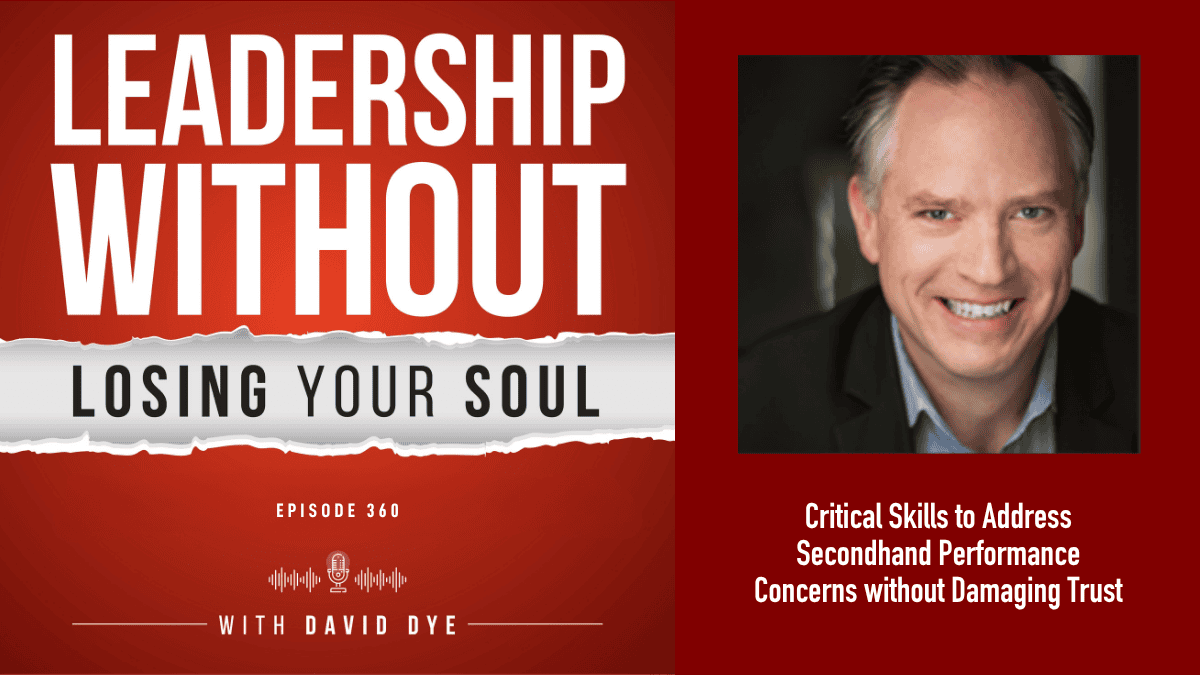

Episode 360: How do you address performance concerns when you didn’t witness the problem yourself?
Leaders regularly receive reports from coworkers, customers, or colleagues about employee behavior they never personally observed. David explains why these situations require investigation rather than assumption. He introduces a step-by-step approach for gathering facts, recognizing personal bias, and conducting productive conversations that protect relationships while improving performance. He also revisits the INSPIRE Method as a proven framework for handling difficult accountability discussions.
You’ll learn how to:
- Handle performance concerns without jumping to conclusions.
- Separate facts from assumptions when receiving secondhand feedback.
- Recognize confirmation bias and proximity bias before making decisions.
- Use curiosity to uncover what actually happened.
- Lead accountability conversations that reduce defensiveness and build trust.
- Create systems that prevent small issues from becoming larger performance problems.
Whether you lead remote employees, multiple shifts, or distributed teams, these communication strategies help you address performance concerns consistently. While strengthening your leadership credibility.
Listen to this episode to learn practical phrases, proven coaching techniques, and leadership habits to help you respond confidently to secondhand reports about employees. If you’re committed to creating a culture of accountability and trust, these tools will help you navigate difficult conversations with clarity and fairness while improving team performance.
Understanding Performance Concerns Before Taking Action
00:00 – David Dye introduces a common leadership challenge. Addressing performance concerns based on secondhand reports. He explains why leaders must balance accountability with fairness when they didn’t personally witness the situation.
00:57 – Learn the two biggest mistakes leaders make when receiving employee complaints. First, accepting reports as fact. Second, ignoring them completely. Learn why both responses damage trust and credibility.
01:54 – Before acting on performance concerns, leaders should become curious by evaluating the source. They should ask what was actually observed, look for patterns, and distinguish facts from interpretations.
03:21 – David discusses confirmation bias and proximity bias. Showing how existing opinions about employees can unintentionally influence leadership decisions and why treating reports as hypotheses leads to better outcomes.
04:37 – Gather additional information by reviewing documentation, consulting neutral observers, clarifying expectations, and involving HR when appropriate before scheduling a difficult conversation.
Leading Better Conversations About Performance
06:12 – David introduces the INSPIRE Method, explaining how connection, curiosity, and commitment create productive accountability conversations that focus on understanding rather than assigning blame.
07:04 – Instead of making accusations, use factual language such as “I received a report that…” to discuss performance concerns without triggering unnecessary defensiveness and inviting the employee’s perspective.
09:56 – Focus on understanding the impact of the reported behavior, reinforcing expectations, and collaborating on solutions that help employees improve while maintaining trust.
11:43 – Prevent future performance concerns by creating systems that include clear written expectations, regular one-on-one meetings, multi-source feedback, and teaching employees how to hold one another accountable.
13:40 – David concludes by explaining when leaders should coach employees themselves. When serious issues involving harassment, safety, ethics, or legal violations should be escalated to Human Resources immediately.
Leadership Without Using Your Soul podcast offers insightful discussions on leadership and management, focusing on essential communication skills, productivity, teamwork, delegation, and feedback to help leaders navigate various leadership styles, management styles, conflict resolution, time management, and active listening while addressing challenges like overwhelm, burnout, work-life balance, and problem-solving in both online and in-person teams, all aimed at cultivating human-centered leadership qualities that promote growth and success.






0 Comments