


Why Capable Teams Miss Deadlines—and How To Get Them Back on Track
Karin, my team is strong and gets a lot done—but we struggle to commit to deadlines. Our work is complex, and we face constant disruptions we can’t say no to. We’re starting to lose credibility. What should I do? — Asking for a Friend
I’m writing this from Kangaroo Island, Australia. Kangaroos are everywhere. They look relaxed, even casual. But if you watch closely, you’ll notice something important:
Kangaroos don’t hop randomly. They pause, assess the terrain, and then leap.
That pause is what many capable teams skip when they commit to deadlines.
5 Ways to Help Your Team Meet Deadlines (With Video)
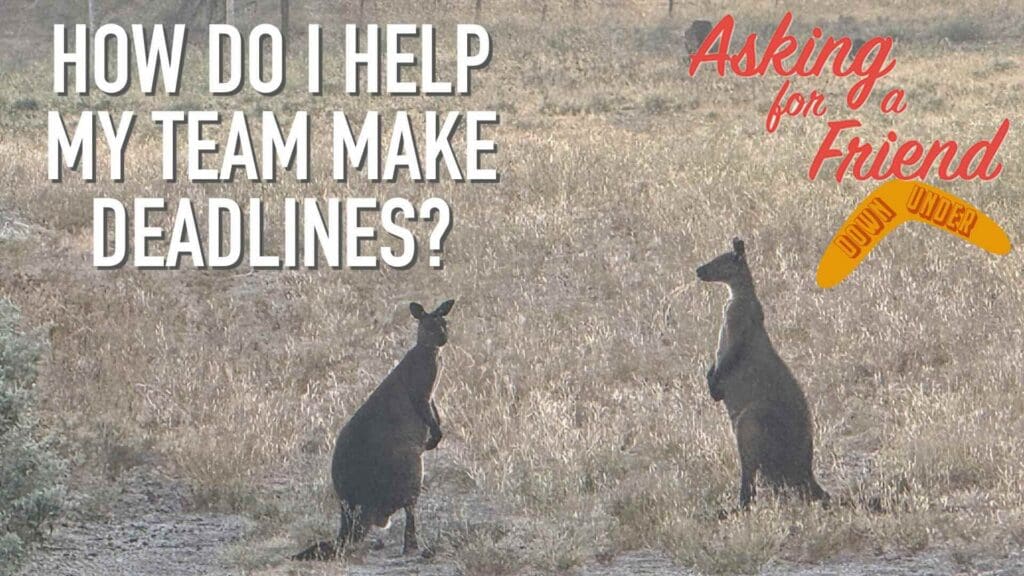
Click on the image above to watch the video (AND see cute kangaroos)
If your team keeps missing deadlines, start here.
1. Diagnose Before Fixing
Missed deadlines aren’t a motivation problem. They’re a signal.
Before resetting another date, ask:
-
Are we missing clarity on scope?
-
Are interruptions pulling focus?
-
Are dependencies unclear?
-
Are we overcommitted?
After a miss, don’t just move the deadline. Ask:
“What got in the way—and what does that tell us about our system?”
When leaders diagnose instead of blame, teams share ideas and offer solutions.
2. Turn Agreement Into Commitment
If you’ve been in one of our leadership development programs, you now how important it is to “schedule the finish” with clear agreement and defined ownership.
Teams often agree to deadlines before they’ve paused to assess risks, trade-offs, or capacity. That’s optimism—not ownership.Before finalizing a date, pause and ask:
-
“On a scale of 1–5, how confident are you?”
-
“What could move this from a 5 to a 3?”
-
“What would need to change to protect this date?”
3. Protect Focus
Kangaroos protect their joeys. Leaders must protect focus with the same seriousness.
If every new request gets an automatic yes, deadlines quietly become optional.
Create a team agreement for interruptions:
-
What requires an immediate response
-
What can wait
-
And what signals a reprioritization conversation
Use this language:
“If we say yes to this, what moves?”
Focus doesn’t survive good intentions—it survives protection.
See Also: How to Say No at Work
4. Surface Dependencies Early
Kangaroos often move as a mob. One shift affects the whole group.
Deadlines slip when teams forget they’re part of a system. One late input or delayed decision cascades fast.At the start of any deadline conversation, ask:
-
“Who are we waiting on?”
-
“Who is waiting on us?”
-
“What decision could slow this down?”
5. Manage Energy, Not Just Effort
Kangaroos don’t sprint nonstop. They manage energy across terrain.
Teams that are always busy but rarely finish aren’t lazy—they’re stretched. Make capacity visible:
-
What’s already on the plate?
-
Where do we need to build in recovery time?
Replace “Can we do this?” with:
“At this pace, what will break?”
Sustainable pace builds predictable results—and credibility.
Summary: Helping Your Team Meet Deadlines
Strong teams don’t necessarily hop faster. They pause before they leap.
If deadlines keep slipping:
-
Diagnose before fixing
-
Turn agreement into commitment
-
Protect focus
-
Surface dependencies early
-
Manage energy, not just effort






0 Comments