
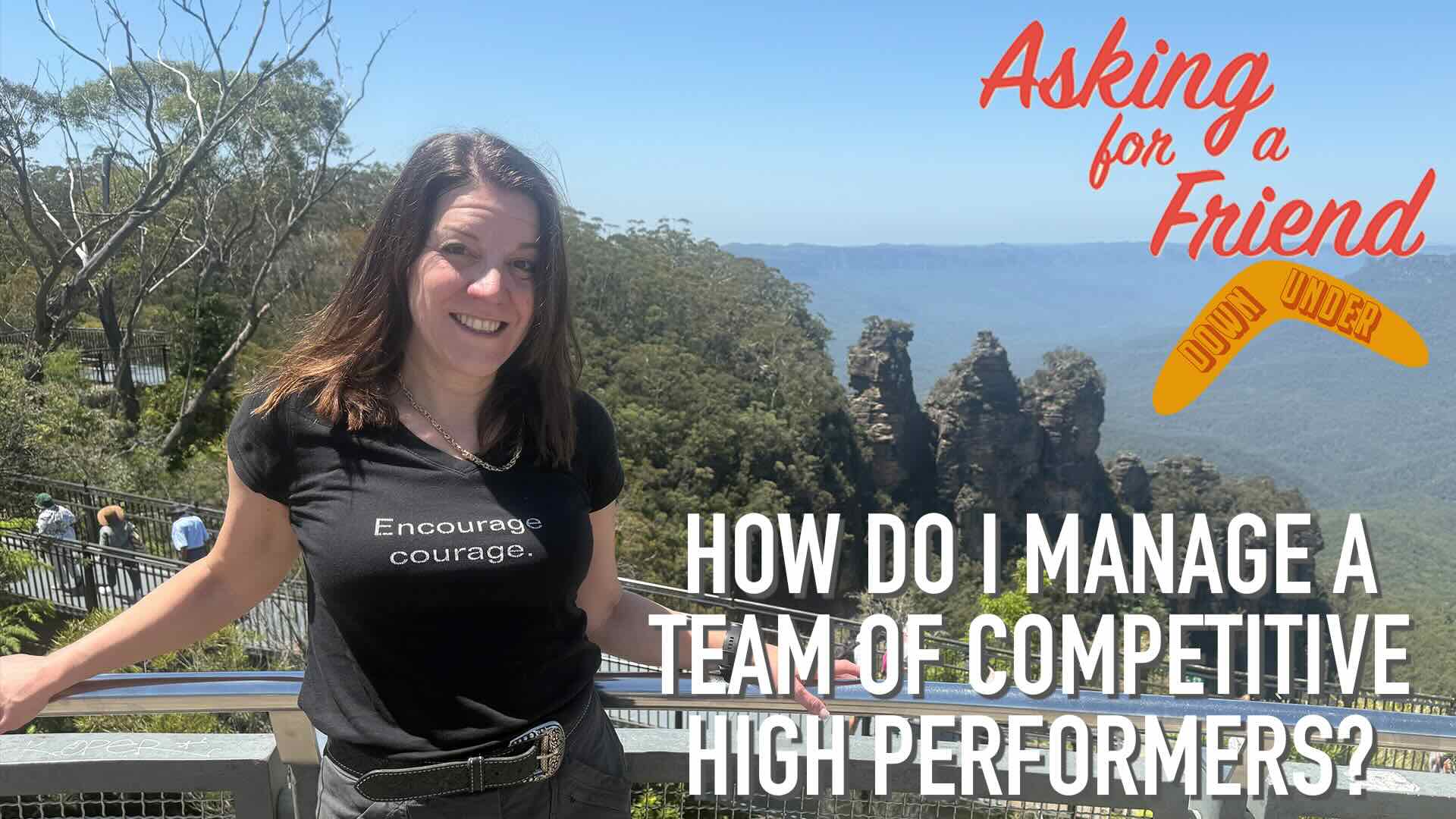

Asking for a Friend: How Do You Get High Performers to Win Together?
What do you do when you’re leading a high-performing team full of smart, driven, A-type achievers?
Big strengths, opinions, and energy.
Also? Big potential for meetings that feel like intellectual sparring matches.
The challenge isn’t talent. It’s channeling that talent into collaboration.
Because the goal isn’t choosing between individuality or teamwork.
It’s teaching them to land in the AND:
-
Bring their strengths AND make space for others
-
Stand in their values AND align around shared success
-
Lead boldly AND stay connected
The Three Sisters and the Power of the AND (with Video)
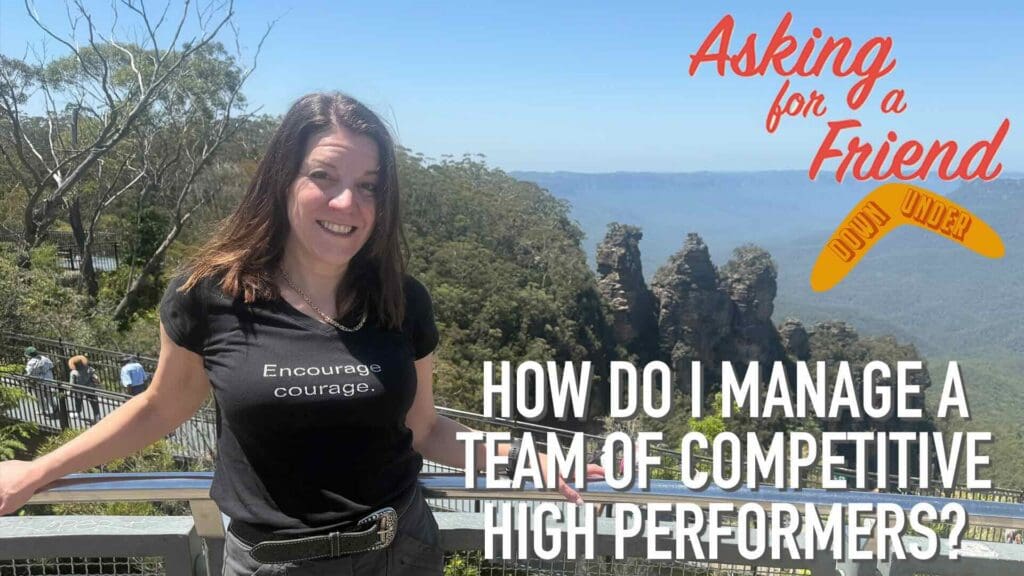
At Echo Point in Australia’s Blue Mountains, the Three Sisters rise side by side—distinct, solid, unmistakable.
They’re not identical. Or competing for tallest-sister dominance. They’re simply… together.
Strong individually. Stronger collectively.
That’s what you want from your high-performing team: not sameness, but interdependence.
I learned this lesson early.
My First “Professional A-Team” Experience
My first job at Bell Atlantic (now Verizon) was on a team like this.
Our boss, Gary, had assembled an all-star lineup:
-
a top-ranked sales director
-
a brilliant engineering leader
-
seasoned customer service leaders
-
and me—recruited straight out of a PhD program to lead HR initiatives
We were talented and intense.
Gary knew the first step wasn’t to tone us down.
It was to help each of us show up grounded in what we brought:
-
our strengths
-
our values
-
our best contribution
How Leaders Turn Individual Stars Into a High-Performing Team
Then he built the conditions for us to win together—using we now teach as four dimensions of collaboration.
1. Clarity: Define Winning Together
Gary started with a shared definition of success.
No separate scorecards.
His message was simple: Then he built the conditions for us to win together—using what I now call the four dimensions of collaboration.
Then he made it real—by tying our bonuses together.
Nothing creates alignment faster than shared stakes.
2. Connection: Know the Humans Behind the Talent
Gary ensured we spent meaningful time together, not just in high-pressure meetings. He regularly invited us to dinner at his home, sometimes with our families.
We got to know one another beyond our roles.
3. Curiosity: Think Together, Not Just Perform Side by Side
He regularly held mandatory meetings to wrestle with big problems together, and carefully structured those meetings so everyone had a voice. He encouraged us to challenge assumptions.
Gary instilled a sense of pride in our team– we are a team that thinks differently and pushes back on bureaucracy. “I hired you because you’re creative, so use it.”
4. Commitment: Accountability With Couth
Eventually, we learned how to have honest accountability conversations without turning them into drama.
No Diaper Genie conversations—where issues get sealed up, stink over time, and explode later.
Commitment meant we could challenge each other with respect and follow-through.
The Leader’s Job: Don’t Dim the Strength—Direct It
We achieved extraordinary results. Most of us went on to bigger executive roles and took our learnings with us. At Gary’s funeral, we were all so grateful for what we learned about human-centered leadership during that time.
The Three Sisters don’t lose their individuality by standing together. They become iconic because they do.
So asking for a friend…
What if your job isn’t to tame strong personalities… …but to help them land in the AND?
Because a high-performing team isn’t a group of solo winners.
It’s a team that knows how to rise—side by side.

0 Comments