
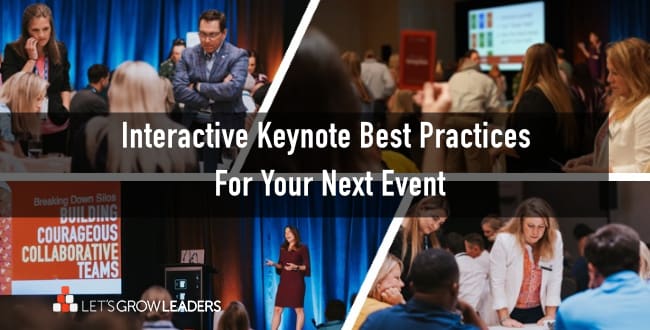
What People Are Really Looking For in an Interactive Leadership Keynote
Most interactive keynote experiences are designed to energize the room for an hour. The best interactive keynote experiences keep working long after the conference ends.
Why? People aren’t just listening to ideas and turning to their neighbor to discuss them — they’re actively connecting those ideas to their own teams, challenges, and conversations.
Leadership development gets sticky with immediate application.
Communication, accountability, collaboration, innovation, and conflict navigation are all human skills. People build those skills through reflection, conversation, practice, and shared experience.
You can feel the difference in the room when that happens.
When the Room Starts Teaching Itself
One of my favorite moments in a keynote is watching a room shift from engaged listening to actively building on one another’s ideas.
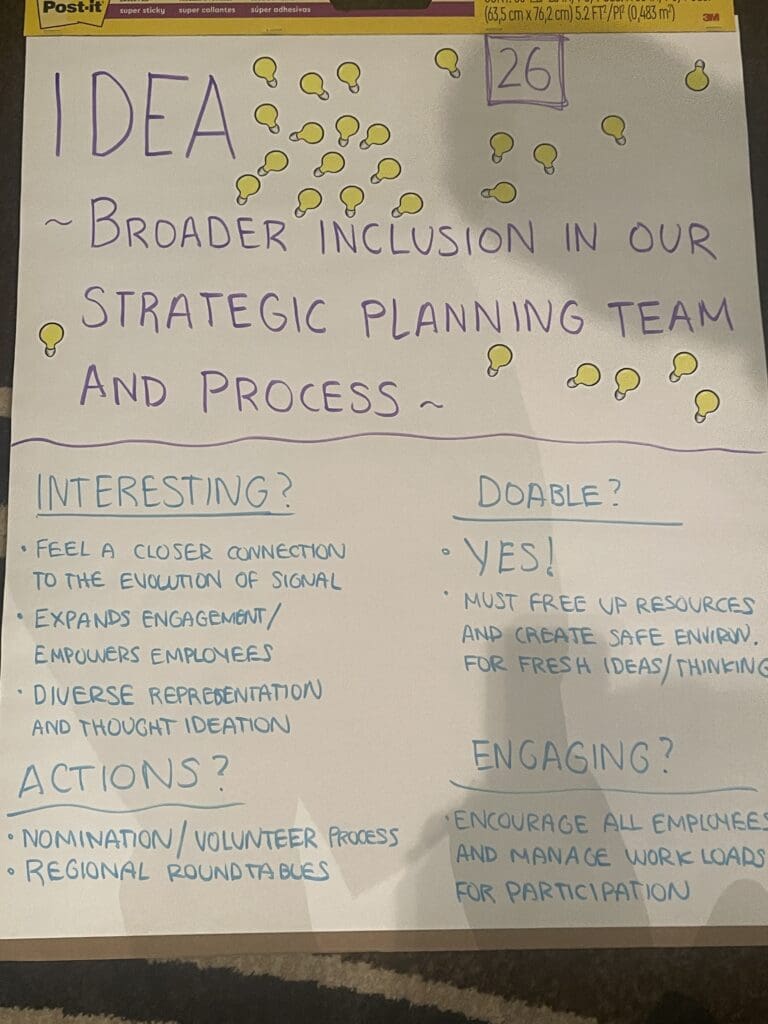
For example, in the first few moments of a Courageous Cultures keynote, I ask each human in the audience to write down one of their best practices to get more remarkable ideas. Then we use light bulb stickers to vote on the ideas people most want to try.
It takes about seven minutes and the room explodes with creative ideation.
Suddenly people are standing up, taking pictures, comparing notes, and swapping ideas across departments.
The real value lies in what happens beneath that energy.
Participants realize the room is already full of smart, practical solutions.
They stop looking at the keynote as a one-way transfer of information and start learning from one another– which sets a powerful stage for the next meaningful interaction and application.
And those peer-to-peer ideas carry credibility because they come from people dealing with similar customers, pressures, constraints, and realities.
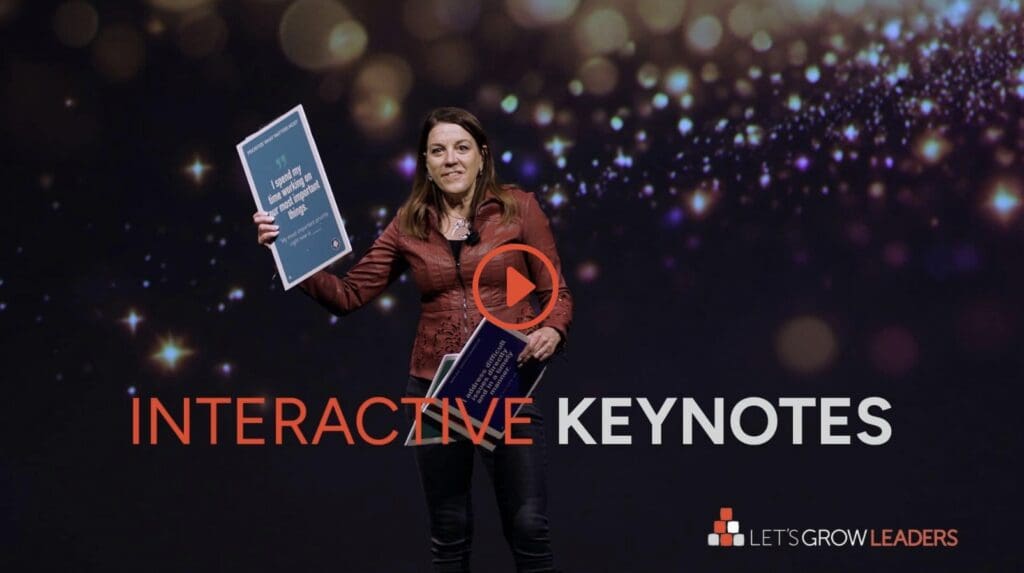
Watch Video to Learn More
Reconnecting People to the Bigger Why
Another favorite, particularly in mission-driven organizations like healthcare, is to have people craft a short “movie trailer” about their work. Note: You can see the movie trailer, lightbulb exercise, and other interactive activity examples in action in the video above.
It gets people laughing almost immediately. But underneath the humor, something more important is happening.
People reconnect to the bigger why behind what they do.
You can watch teams proudly share why the work matters to them.
At a time when many leaders are stretched thin, exhausted, and moving too fast, that moment of connection matters.
People are far more likely to sustain change when they feel connected to purpose.
Why Best Practice Stories (From Your Audience) Change the Energy in the Room
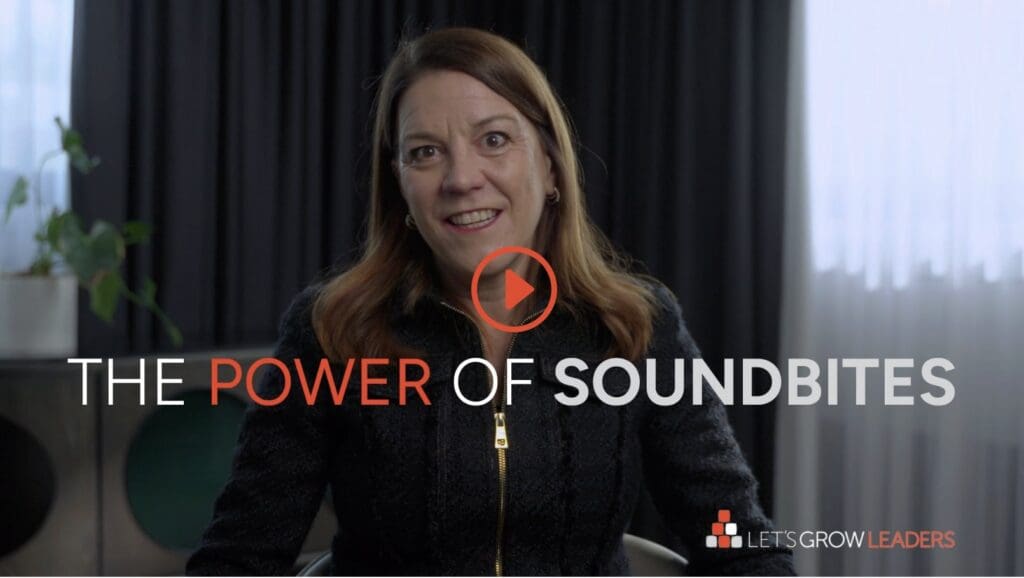
Watch the video for examples of these powerful leadership soundbite examples
I also regularly incorporate short pre-recorded video interview soundbites from audience members into keynote programs.
People talking candidly about challenges they faced, conversations they avoided, experiments that worked, and lessons they learned the hard way.
Those clips create immediate credibility because the audience recognizes themselves in the story. Their personal examples reinforce our research, tools, and content.
You can feel the room lean in when someone says:
“We struggled with this too.”
Or:
“Here’s the small thing that made the biggest difference for our team.”
Every Exercise Has a Job to Do
 People tell me all the time that the experience feels different from other “interactive” sessions they’ve attended.
I think that’s because every exercise has a purpose.
The movie trailer exercise reconnects people to their bigger why, and sharing that why with one another creates immediate connection.
The SynergyStack Collaboration System helps participants quickly identify habits that will make the biggest difference for them, create a mini-personal experiment to make it happen, and receive curated practical resources for the habit they chose, which they can use right away.
The best-practice sharing exercise surfaces ideas already inside the organization or association.
And our Courageous Cultures I.D.E.A. Incubator process (for longer programs) gives people a practical approach to generate and present ideas around strategic challenges. This short video shows how we did this with the middle-management team at Nestlé Switzerland as a capstone of their leadership development program.
People are thinking and connecting the entire time.
The interaction isn’t there to fill space or keep energy levels high. It’s there to help people connect ideas to real behavior, real conversations, and real work.
Participation Looks Different for Different People
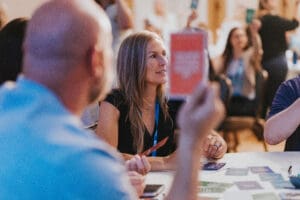 Great interactive keynote facilitation also creates multiple ways for people to engage comfortably.
Some people process by talking in a small group.
Others need a moment to reflect first.
Some enjoy sharing publicly.
Others contribute more naturally in pairs or table conversations.
When participation feels thoughtful and low-pressure, people engage more openly.
That’s especially important now, when organizations are navigating:
- burnout
- communication breakdowns
- hybrid work tension
- accountability struggles
- rapid change
People need space to process ideas, hear different perspectives, and identify practical next steps they can use immediately.
The ROI Happens After the Keynote
The real value of an interactive keynote happens later.
When someone uses a phrase from the session in a difficult conversation.
When a team tries an idea they heard from another table.
When leaders leave still talking to one another instead of heading straight for the exits and their phones.
That’s when you know the learning landed.
Learn More About Karin Hurt’s Interactive Leadership Keynotes
Are you looking for an interactive keynote speaker? You can learn more about Karin’s most popular interactive leadership keynote topics, and watch her speaking reel here.

0 Comments