
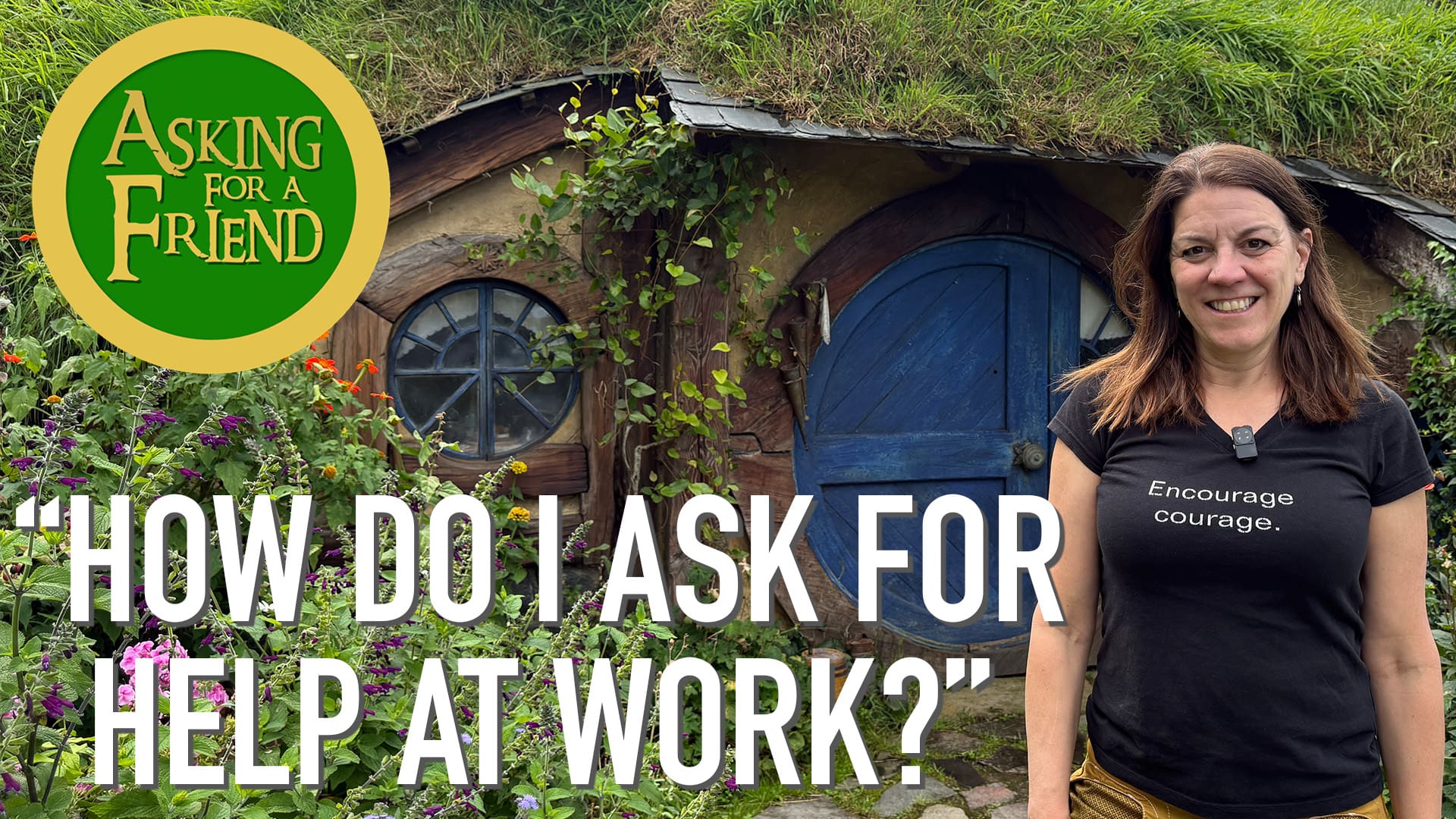

Even Frodo Needed a Fellowship: How to Ask For a Teammate for Help
You don’t feel overwhelmed because you’re incapable. You feel overwhelmed because you are highly competent and get stuff done. You see what others miss (or at least see it sooner), and do what matters without asking for help.
If you’re a leader who often ends up holding more than your share, this isn’t a time-management issue.
It’s a leadership pattern.
And it takes practical courage to interrupt it.
A Lesson From Hobbiton (With Video)
Cliick on the image to watch this Asking for a Friend Video From Hobbiton, New Zealand
Frodo didn’t take the ring because he was the strongest.
He stepped forward because someone had to.
But the story only works because he didn’t carry it alone.
A fellowship formed.
Others committed, protected him, and stepped in when he couldn’t continue.
Why Leaders Struggle to Ask for Help
For high-performing leaders, asking for help can feel… off.
You might be thinking:
“I should be able to handle this.”
“It’s faster if I just do it.”
“They’re already stretched.”
“I don’t want to lower the bar.”
And there’s a deeper layer many competent leaders don’t say out loud:
“If I don’t step in, what if it falls short?”
So you rescue.
You refine.
You absorb.
But here’s the unintended consequence:
When you consistently over-function, your team under-functions.
Not because they’re incapable.
Because the system has trained them that you’ll catch it.
Silence teaches.
Rescuing teaches.
Over-responsibility teaches.
How to Stop Carrying the Ring Alone (Don’t Rescue Your Team)
This isn’t about lowering expectations.
It’s about shifting how ownership works.
1. Make the Weight Visible
Your team may not see what you’re carrying.
Instead of silently absorbing more, say:
“I’m holding several cross-functional pieces right now. Let’s look at what truly belongs where.”
This isn’t weakness.
It’s clarity.
2. Clarify What Is — and Isn’t — Yours 
Strong leaders often pick up work that was never explicitly assigned to them.
Ask yourself:
What am I accountable for?
What have I taken on by default?
And, most importantly, what would happen if I didn’t step in immediately?
Sometimes the bravest move isn’t doing more.
3. Replace Rescuing With Agreements
Instead of fixing it yourself, try:
“Walk me through how you’re thinking about this.”
“What support would help you own this fully?”
“Can you commit to leading this piece and updating me by Friday?”
Ownership grows when responsibility is explicit.
4. Let Discomfort Do Its Work
This is the hardest part.
When you stop rescuing, performance may wobble briefly.
That doesn’t mean you made a mistake.
It means the fellowship is forming.
Practical courage at this level isn’t dramatic.
It’s resisting the urge to automatically step in.
The Bigger Culture Shift
If you consistently carry everything, you may get short-term efficiency.
But you lose long-term capability.
Teams don’t grow under constant rescue.
They grow under shared responsibility.
Asking for help — or refusing to over-function — isn’t about you needing less strength.
It’s about building more strength around you.
Even Frodo needed a fellowship.
What are you carrying right now that was never meant to be carried alone?



0 Comments